Viloma Prāṇāyāma: what is it?
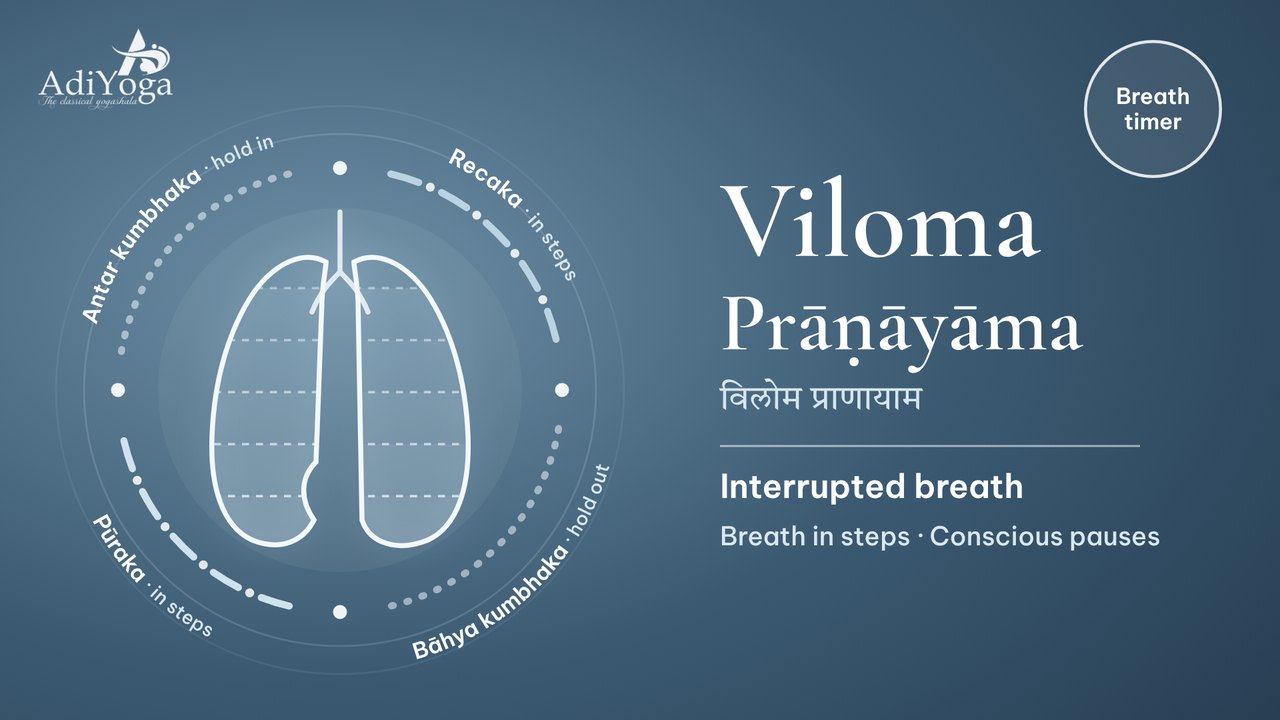
Viloma means ‘against the natural flow’. The continuous breath is interrupted by gentle, rhythmic pauses, so the breath climbs into the lungs, or comes down out of them, step by step, like a staircase. In Stage 1 the inhalation is taken in small sips with a pause after each; in Stage 2 the exhalation is released in small steps; in Stage 3 both. After the steps comes a hold: antar kumbhaka with full lungs, or bāhya kumbhaka with empty lungs. Viloma trains breath awareness, expands lung capacity gradually, and lets even beginners experience kumbhaka safely. As it deepens, the pauses become doorways into stillness.
Meaning
- Vi: against, apart
- Loma: hair; the natural direction, ‘with the grain’
- Viloma: against the natural flow: the breath interrupted by pauses
- Prāṇāyāma: expansion of prāṇa, the life force
Benefits
- Increases lung capacity; fills and empties the lungs more completely
- Strengthens the diaphragm and the muscles between the ribs
- Calms the nervous system: slower heart rate, better heart rate variability, less stress
- Builds CO₂ tolerance, which calms the brain and improves focus
- A safe, gradual way into kumbhaka, the pause of the breath
- The pauses turn the mind inward: preparation for meditation
How to practise
- Sit upright in a comfortable posture; breathe only through the nose
- Practise on an empty stomach
- Pause gently, without closing the throat hard; a pause is a resting point, never suppression
- Start with 5 pauses at Stage 1; add one pause only when it is effortless. Each level may take days or weeks
- Stage 2 and 3 (empty-lung hold): avoid with low blood pressure, heart conditions, hernia, epilepsy or pregnancy
Severe anxiety or an acute respiratory infection: do not practise. Stop if you feel dizzy or anxious, and breathe normally
Practise every day with the Adiyogashala app
- ✓ A breath timer with a guiding voice
- ✓ 3 levels that grow with you
- ✓ Keeps playing with the screen locked
- ✓ Opens on your phone, no app store needed
Frequently asked questions
What is Viloma Prāṇāyāma?
Viloma means ‘against the natural flow’. The continuous breath is interrupted by gentle, rhythmic pauses, so the breath climbs into the lungs, or comes down out of them, step by step, like a staircase. In Stage 1 the inhalation is taken in small sips with a pause after each; in Stage 2 the exhalation is released in small steps; in Stage 3 both. After the steps comes a hold: antar kumbhaka with full lungs, or bāhya kumbhaka with empty lungs. Viloma trains breath awareness, expands lung capacity gradually, and lets even beginners experience kumbhaka safely. As it deepens, the pauses become doorways into stillness.
What are the benefits of Viloma Prāṇāyāma?
Increases lung capacity; fills and empties the lungs more completely; Strengthens the diaphragm and the muscles between the ribs; Calms the nervous system: slower heart rate, better heart rate variability, less stress; Builds CO₂ tolerance, which calms the brain and improves focus; A safe, gradual way into kumbhaka, the pause of the breath; The pauses turn the mind inward: preparation for meditation.
Who should not practise Viloma Prāṇāyāma?
Severe anxiety or an acute respiratory infection: do not practise. Stop if you feel dizzy or anxious, and breathe normally
Is there a timer app for Viloma Prāṇāyāma?
Yes. The Adiyogashala app has a voice-guided breath timer with 3 levels, free. Open adiyogashala.org on your phone; no app store needed.
More breathing exercises
 Natural Breathing · Sahaja PrāṇāyāmaSimple breathing: easy, natural, relaxing
 Ujjāyī Breathing · the ocean breathThe ocean breath: deep, slow, warming
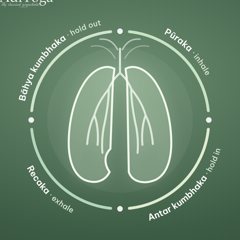 Box Breathing · Sama Vṛtti PrāṇāyāmaEqual breathing: calm, steady, balanced
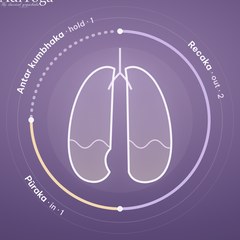 Ratio Breathing · Viṣama Vṛtti PrāṇāyāmaUneven breathing: a longer exhale for deep calm
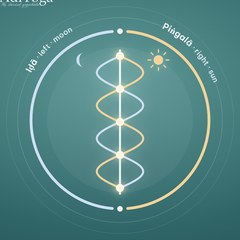 Alternate Nostril Breathing · Nāḍī ŚodhanaAlternate nostril breathing: balance and purify
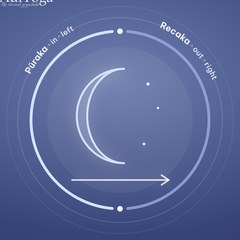 Moon Breath · Chandra BhedanaMoon breath: inhale left, exhale right · cooling, calming
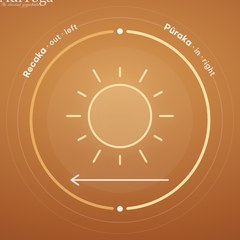 Sun Breath · Sūrya BhedanaSun breath: inhale right, exhale left · warming, energising
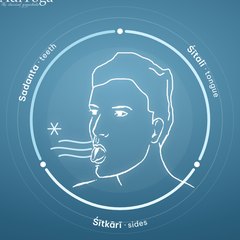 Cooling Breaths · Śītalī, Śītkārī, SadantaCooling breaths: in through the mouth, out through the nose
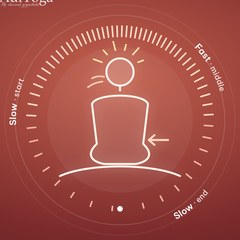 Kapālabhāti · the skull-shining breathShining-skull breath: short, strong exhales that cleanse and energise
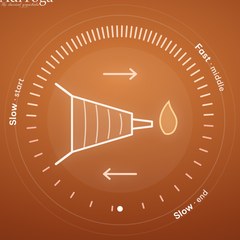 Bellows Breath · Bhastrikā PrāṇāyāmaBellows breath: strong, equal inhales and exhales that build heat and energy
Adiyogashala is a school of classical Hatha Yoga, founded in Hanoi in 2016 and based in Mysore, India and Hanoi, Vietnam. Its founder Girish began practising at the age of eight in Mysore, has 26 years of practice and an MSc in Yoga.
Educational guidance; with a medical condition, ask your doctor before you practise.