Sandhi Shakti Kriyā: what is it?
A systematic, mindful practice to activate, release and strengthen the joints from the neck to the toes, with gentle circular and directional movements led by the breath. More than a warm-up: yoga sees the joints as places where energy becomes knotted, and this kriyā helps restore its natural flow.
Meaning
- Sandhi: joint
- Shakti: energy, vitality
- Kriyā: conscious movement
Benefits
- Improves mobility and flexibility in all major joints
- Enhances circulation around joints, ligaments and connective tissue
- Reduces stiffness, swelling and discomfort, including arthritis
- Supports graceful ageing and ease in daily movement
- Releases trapped tension and energy, and opens the subtle knots (granthis) at the joints
- Builds body awareness through breath-led, mindful movement
- Strengthens the mind–body connection and prepares for deeper āsana, prāṇāyāma or meditation
Step by step
- Breath preparation: Vertical arm rising and horizontal chest expansion with Ujjāyī breath, 3–5 times each, to open the chest and wake up the circulation.
- Upper limbs: Wrists and elbows 5 times each way; big, slow shoulder circles and shoulder-blade rotation.
- Middle spine: Side bending, a seated twist three ways (palm, wrist, elbow), then spine lengthening and a forward bend.
- Lower limbs, one leg at a time: Ankle rotation, knee activation, hip rocking ‘like a baby’. Right, then left.
- Both hips: Baddha Koṇāsana: Baddha Koṇāsana with 3 breaths, Patangāsana (butterfly) knees up and down 20 times, then a forward bend 3 times.
- Dhauti and bandhas: Four rounds of Dhauti with the breath held out: belly in, belly released, Agnisāra, Madhyama Nauli.
How to practise
- Move slowly and let the breath lead; never force a joint
- Keep Ujjāyī breathing through the whole practice
- Legs: right side first, ankle → knee → hip, then the left
- Dhauti, bandhas, Agnisāra and Nauli: only on an empty stomach
- High blood pressure, heart conditions, hernia, recent abdominal surgery, pregnancy or menstruation: skip step 7, or ask your teacher first
With a slipped disc, sciatica or a recent injury: move very gently, skip anything that hurts, and ask your doctor or teacher.
Practise every day with the Adiyogashala app
- ✓ Voice-guided video, like a live class
- ✓ Learn step by step: alignment and common mistakes
- ✓ Keeps playing with the screen locked
- ✓ Opens on your phone, no app store needed
This practice is part of the 30-day “Foundation of Yoga” course, with a free 3-day trial. Yoga course for beginners →
Frequently asked questions
What is Sandhi Shakti Kriyā?
A systematic, mindful practice to activate, release and strengthen the joints from the neck to the toes, with gentle circular and directional movements led by the breath. More than a warm-up: yoga sees the joints as places where energy becomes knotted, and this kriyā helps restore its natural flow.
What are the benefits of Sandhi Shakti Kriyā?
Improves mobility and flexibility in all major joints; Enhances circulation around joints, ligaments and connective tissue; Reduces stiffness, swelling and discomfort, including arthritis; Supports graceful ageing and ease in daily movement; Releases trapped tension and energy, and opens the subtle knots (granthis) at the joints; Builds body awareness through breath-led, mindful movement; Strengthens the mind–body connection and prepares for deeper āsana, prāṇāyāma or meditation.
Who should not practise Sandhi Shakti Kriyā?
With a slipped disc, sciatica or a recent injury: move very gently, skip anything that hurts, and ask your doctor or teacher.
Is there a follow-along video for Sandhi Shakti Kriyā?
Yes. The Adiyogashala app has a voice-guided follow-along video and a step-by-step lesson. Open adiyogashala.org on your phone; no app store needed.
More breathing exercises
 Yoga for Back Pain · Merudanda KriyāSpinal awakening: the 13-step flow
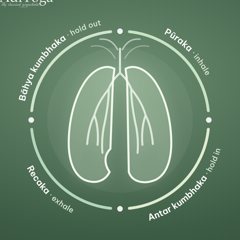 Box Breathing · Sama Vṛtti PrāṇāyāmaEqual breathing: calm, steady, balanced
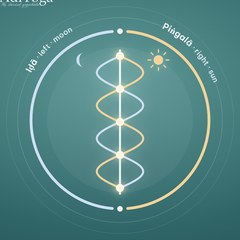 Alternate Nostril Breathing · Nāḍī ŚodhanaAlternate nostril breathing: balance and purify
Adiyogashala is a school of classical Hatha Yoga, founded in Hanoi in 2016 and based in Mysore, India and Hanoi, Vietnam. Its founder Girish began practising at the age of eight in Mysore, has 26 years of practice and an MSc in Yoga.
Educational guidance; with a medical condition, ask your doctor before you practise.