 Adiyogashala
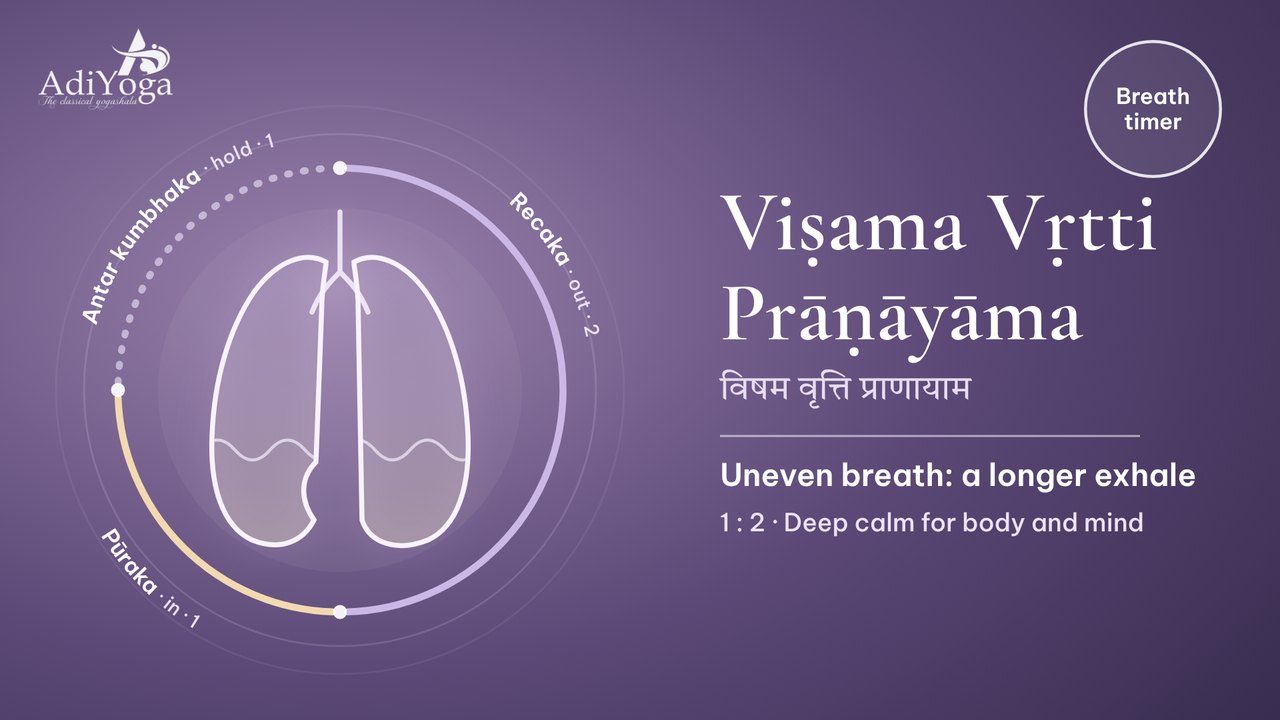
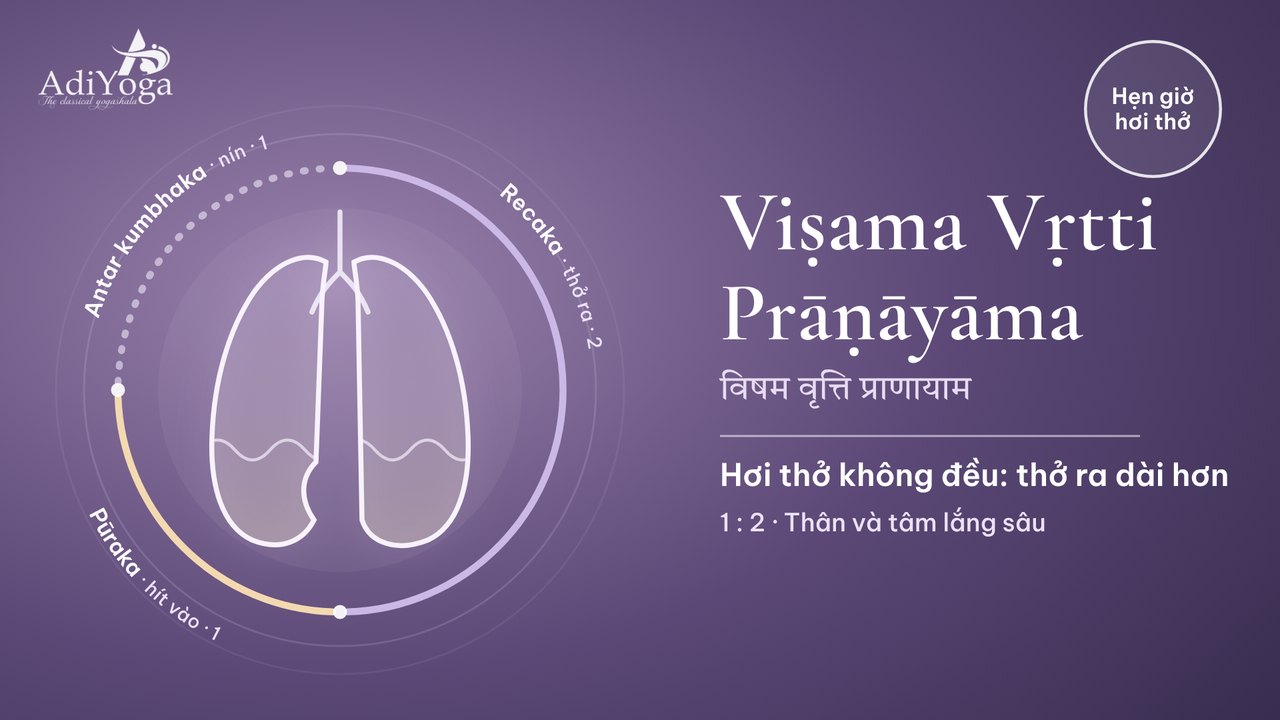
Viṣama Vṛtti Prāṇāyāma
Uneven breathing: a longer exhale for deep calm
Viṣama Vṛtti Prāṇāyāma
Hơi thở không đều: thở ra dài hơn để lắng sâu
Meaning
Viṣama: unequal, uneven · Vṛtti: movement, wave · Prāṇāyāma: expansion of prāṇa, the life force
About this practice
Viṣama Vṛtti means uneven movement. Where Sama Vṛtti gives every part of the breath the same time, Viṣama Vṛtti gives them different lengths in a fixed ratio, classically 1 : 4 : 2: inhalation (pūraka) one part, holding the breath in (antar kumbhaka) four parts, exhalation (recaka) two parts. Patañjali describes prāṇāyāma as breath regulated by place, time and number (deśa, kāla, saṅkhyā), becoming long and subtle (Yoga Sūtra 2.50). A long, slow exhalation is the most direct way to calm the nervous system: the heart slows and the mind settles.
Benefits
- Calms the nervous system; the long exhale relaxes body and mind
- Helps with stress, anxiety and restlessness
- Supports deep sleep when practiced in the evening
- Slows the heart rate and deepens the breath
- Builds breath control; the next step after Sama Vṛtti
Good to know
- Sit upright and still; breathe through the nose
- Practice on an empty stomach
- Learn Sama Vṛtti first; start Viṣama Vṛtti at the Beginner level (1 : 4 : 2)
- The exhale is slow and even, never pushed; if you need to gasp on the next inhale, the count is too long
- High blood pressure, heart or eye conditions, pregnancy: do not hold the breath; practice Sama Vṛtti without holds, and ask your teacher
Ý nghĩa
Viṣama: không bằng nhau, không đều · Vṛtti: chuyển động, làn sóng · Prāṇāyāma: mở rộng prāṇa, sinh lực
Về bài tập
Viṣama Vṛtti nghĩa là chuyển động không đều. Nếu Sama Vṛtti cho mọi phần của hơi thở cùng một thời gian, thì Viṣama Vṛtti cho chúng độ dài khác nhau theo một tỉ lệ cố định, cổ điển là 1 : 4 : 2: hít vào (pūraka) một phần, nín thở bên trong (antar kumbhaka) bốn phần, thở ra (recaka) hai phần. Patañjali mô tả prāṇāyāma là hơi thở được điều hòa theo nơi chốn, thời gian và số đếm (deśa, kāla, saṅkhyā), trở nên dài và vi tế (Yoga Sūtra 2.50). Thở ra dài và chậm là cách trực tiếp nhất để làm dịu hệ thần kinh: tim đập chậm lại và tâm lắng xuống.
Lợi ích
- Làm dịu hệ thần kinh; hơi thở ra dài thư giãn thân và tâm
- Hỗ trợ khi căng thẳng, lo âu và bồn chồn
- Giúp ngủ sâu khi tập vào buổi tối
- Làm chậm nhịp tim và hơi thở sâu hơn
- Tăng khả năng kiểm soát hơi thở; bước tiếp theo sau Sama Vṛtti
Cần biết
- Ngồi thẳng và yên; thở bằng mũi
- Tập khi bụng đói
- Học Sama Vṛtti trước; bắt đầu Viṣama Vṛtti ở cấp Người mới (1 : 4 : 2)
- Thở ra chậm và đều, không bao giờ ép; nếu phải hớp hơi ở lần hít tiếp theo, số đếm đang quá dài
- Huyết áp cao, bệnh tim hoặc mắt, mang thai: không nín thở; hãy tập Sama Vṛtti không nín thở, và hỏi giáo viên
Practice with video in the app
Follow the guided video with breath counting, in English or Vietnamese.
Tập theo video trong ứng dụng
Tập theo video có hướng dẫn và đếm hơi thở, bằng tiếng Việt hoặc tiếng Anh.