 Adiyogashala
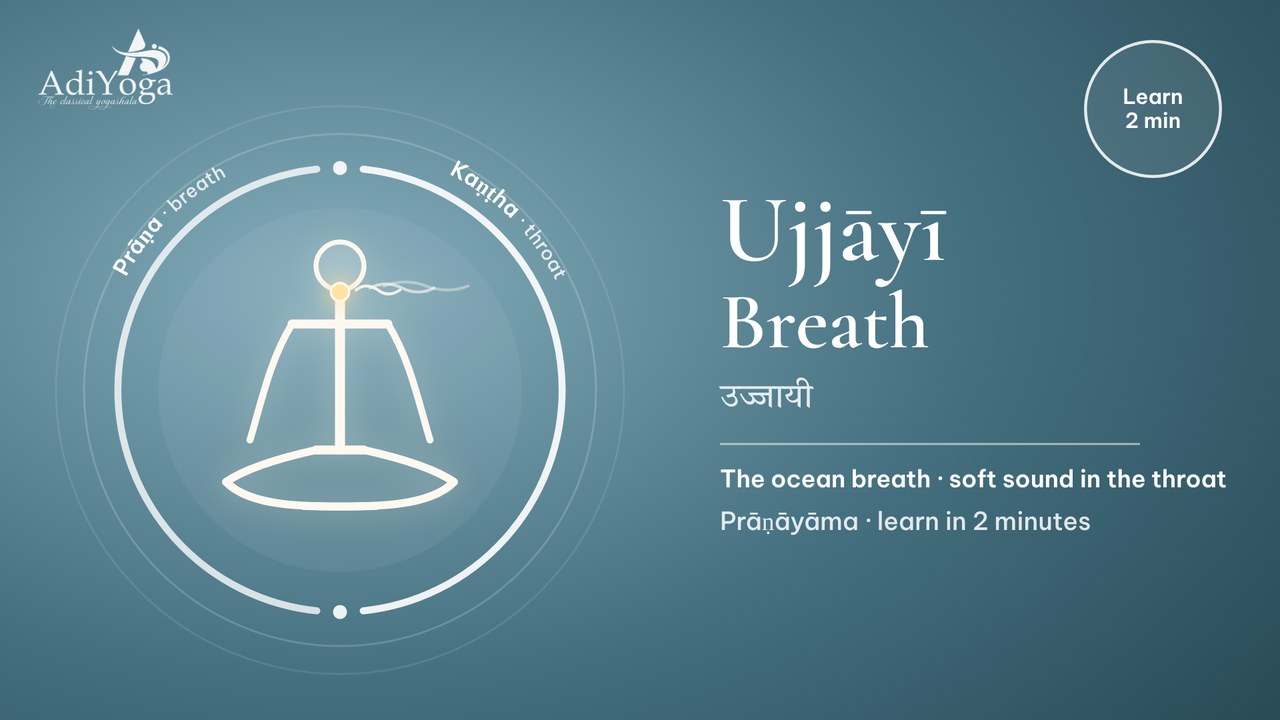
Ujjāyī · the ocean breath
The ocean breath: deep, slow, warming
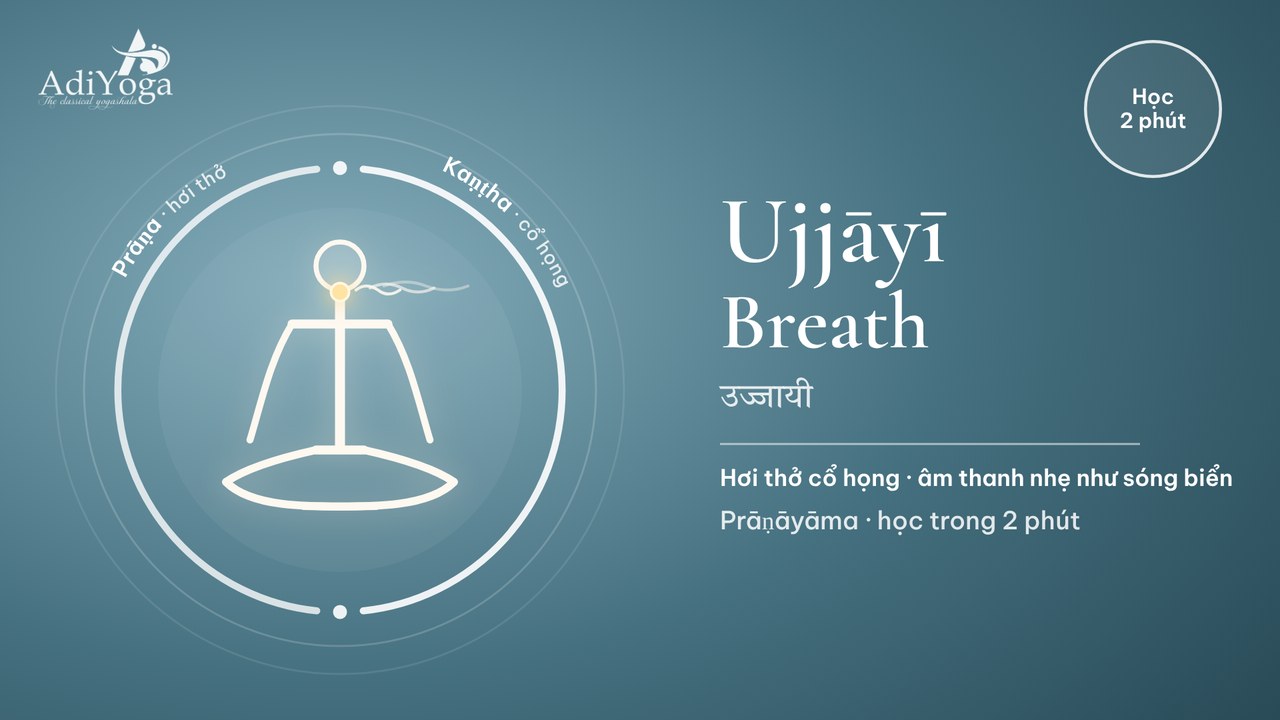
Ujjāyī · hơi thở cổ họng
Hơi thở sóng biển: sâu, chậm, làm ấm cơ thể
Meaning
Ujjāyī: victorious; from ujjaya, victory
About this practice
In Ujjāyī breath we partially close the windpipe with the help of the glottis, for a deep and slow breath. Like a water bottle with a small opening, the breath flows out slowly. The air in the narrow throat sounds like the waves of the ocean, so it is also called the ocean breath. The gentle friction warms the body and helps the blood circulate; the inner sound turns the mind inward; and it lets you breathe deeply while the core stays stable. Ujjāyī breath is different from Ujjāyī prāṇāyāma, which the hatha texts describe in different ways. In vinyasa, we do not force the breath to the movement: we move as the breath moves.
Benefits
- Deep, slow, controlled breath
- Warms the body and helps circulation
- The inner sound brings focus and turns the mind inward
- Deep breathing with a stable core, in every posture
Good to know
- Mouth closed, breathe through the nose
- Find the sound: fog a window with “haaa”, then do the same with the mouth closed
- Or keep a small saliva bubble in the mouth and breathe without breaking it
- The sound is soft, heard only by you. Never squeeze the throat
- If it is difficult, simply breathe slowly through the nose
Ý nghĩa
Ujjāyī: chiến thắng; từ ujjaya, sự chiến thắng
Về bài tập
Trong hơi thở Ujjāyī, chúng ta khép một phần đường thở nhờ nắp thanh quản, để thở sâu và chậm. Như một chai nước có miệng nhỏ, hơi thở chảy ra chậm rãi. Không khí đi qua cổ họng hẹp tạo âm thanh như tiếng sóng biển, nên còn gọi là hơi thở sóng biển. Ma sát nhẹ làm ấm cơ thể và giúp máu lưu thông; âm thanh bên trong đưa tâm trí vào trong; và nó giúp bạn thở sâu trong khi phần bụng vẫn vững vàng. Hơi thở Ujjāyī khác với Ujjāyī prāṇāyāma, được các sách hatha mô tả theo nhiều cách. Trong Vinyasa, chúng ta không ép hơi thở theo chuyển động: chúng ta chuyển động theo hơi thở.
Lợi ích
- Hơi thở sâu, chậm, có kiểm soát
- Làm ấm cơ thể và giúp tuần hoàn
- Âm thanh bên trong mang lại tập trung, đưa tâm trí vào trong
- Thở sâu với phần bụng vững vàng, trong mọi tư thế
Cần biết
- Ngậm miệng, thở bằng mũi
- Tìm âm thanh: hà hơi lên cửa kính “haaa”, rồi làm như vậy với miệng ngậm
- Hoặc giữ một bọt nước bọt nhỏ trong miệng và thở mà không làm vỡ nó
- Âm thanh nhẹ, chỉ mình bạn nghe thấy. Đừng siết cổ họng
- Nếu thấy khó, chỉ cần thở chậm bằng mũi
Practice with video in the app
Follow the guided video with breath counting, in English or Vietnamese.
Tập theo video trong ứng dụng
Tập theo video có hướng dẫn và đếm hơi thở, bằng tiếng Việt hoặc tiếng Anh.