 Adiyogashala
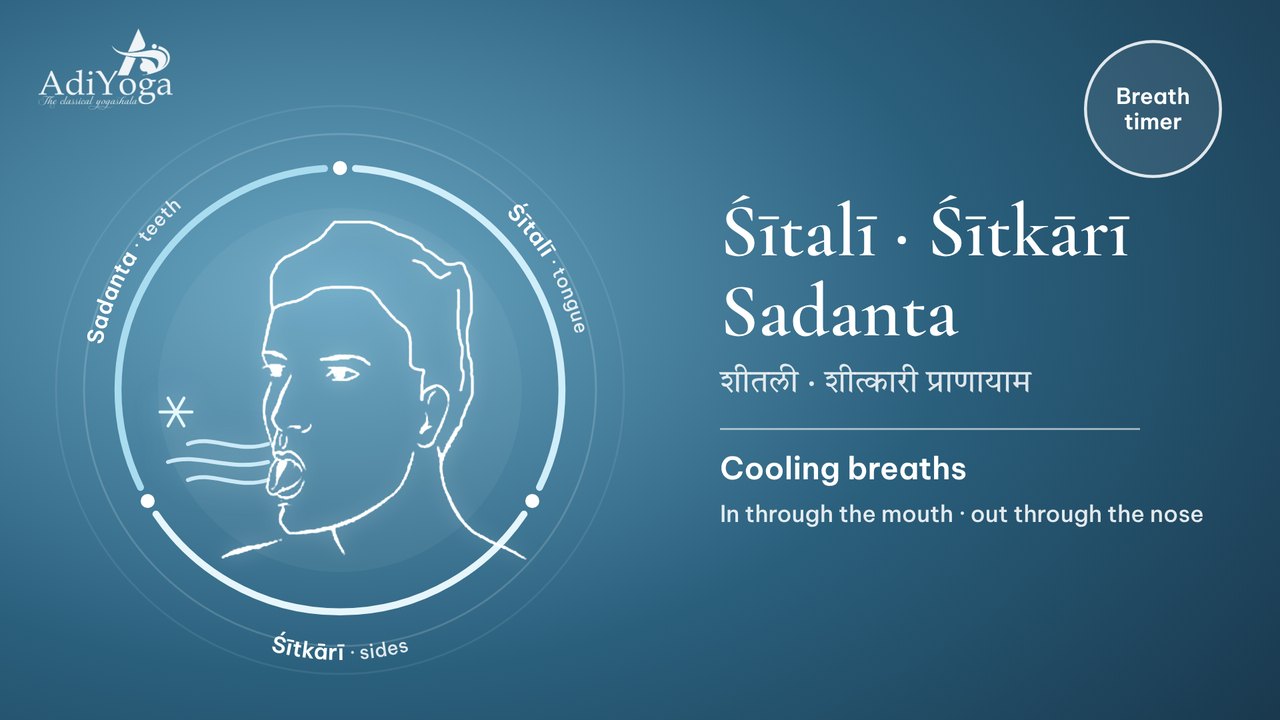
Śītalī · Śītkārī · Sadanta
Cooling breaths: in through the mouth, out through the nose
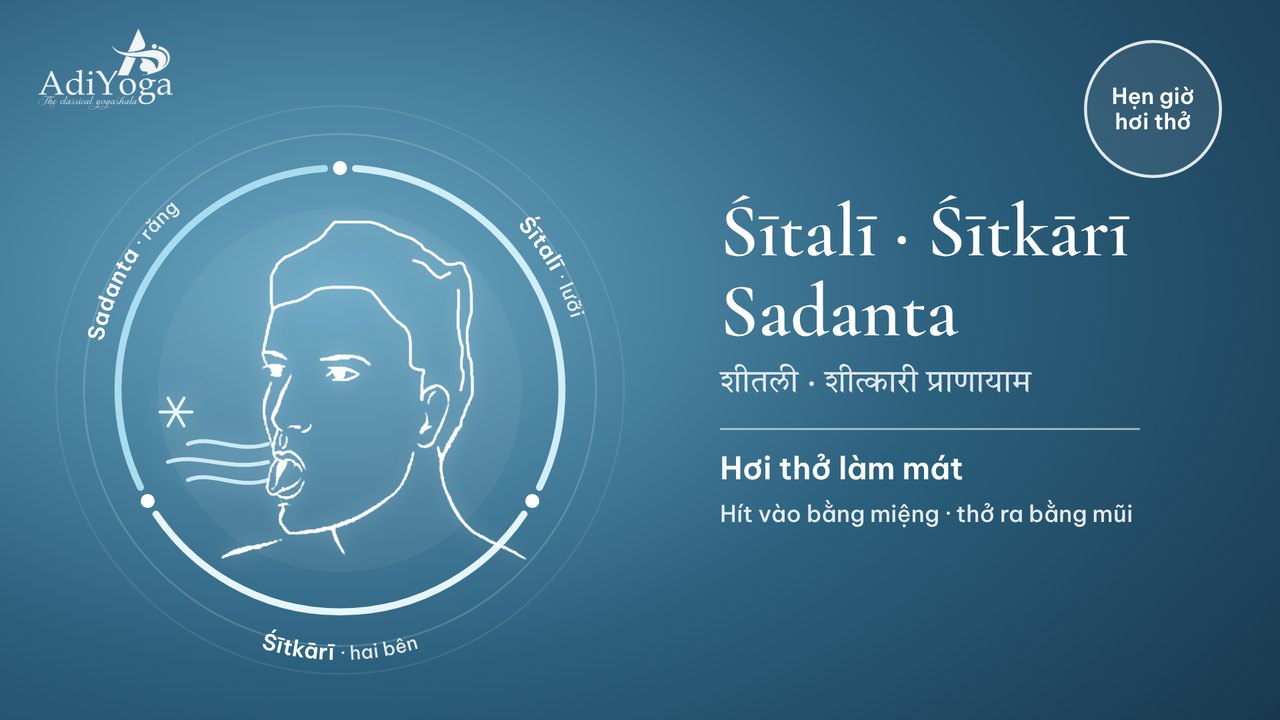
Śītalī · Śītkārī · Sadanta
Hơi thở làm mát: hít vào bằng miệng, thở ra bằng mũi
Meaning
Śītalī: cooling, the one that cools · Śītkārī: the one that makes the 'sīt' sound, the hiss of the breath · Sadanta: with the teeth (sa + danta)
About this practice
Three cooling prāṇāyāma. In all of them we breathe in through the mouth, so the air passes over the tongue or the teeth, then close the mouth and breathe out slowly through the nose. Śītalī: the tongue rolled into a tube. Śītkārī: the teeth lightly together and the tongue folded back to the palate, breathing in through both sides of the mouth with a soft hiss. Sadanta: the teeth together and the tongue pressed behind them, breathing in through the teeth in the middle. The Haṭha Yoga Pradīpikā (2.54–58) teaches Śītkārī and Śītalī to cool the body and calm hunger, thirst and excess heat. As the air passes the moist tongue and teeth, a little moisture evaporates and takes heat away; the slow breath and long exhale through the nose calm the nervous system. Small studies have found lower blood pressure, heart rate and stress after regular practice.
Benefits
- Cools the body on hot days and after strong practice
- Calms anger, irritation and restlessness
- Slows the heart and the breath; studies suggest lower blood pressure with regular practice
- Refreshes the mouth and throat; eases thirst
- Settles the mind before meditation or sleep
Good to know
- Sit upright; inhale slowly through the mouth, close the mouth, exhale slowly through the nose
- Cannot roll the tongue? Choose Śītkārī or Sadanta. Sensitive teeth or gums? Choose Śītalī
- Practice in clean air, never in dust, smoke or cold wind; best in warm weather
- Avoid with low blood pressure, asthma, a cold, cough or sore throat, or chronic constipation
- High blood pressure, heart conditions, pregnancy: ask your teacher first, and never strain in the hold
Ý nghĩa
Śītalī: làm mát, điều làm mát · Śītkārī: điều tạo ra tiếng 'sít', tiếng xì của hơi thở · Sadanta: cùng với răng (sa + danta)
Về bài tập
Ba bài prāṇāyāma làm mát. Ở cả ba, chúng ta hít vào bằng miệng để không khí đi qua lưỡi hoặc răng, rồi ngậm miệng và thở ra thật chậm bằng mũi. Śītalī: lưỡi cuộn thành ống. Śītkārī: răng chạm nhẹ và lưỡi gập ra sau chạm vòm miệng, hít vào qua hai bên miệng với tiếng xì nhẹ. Sadanta: răng chạm nhau và lưỡi ép sau răng, hít vào qua kẽ răng ở giữa. Haṭha Yoga Pradīpikā (2.54–58) dạy Śītkārī và Śītalī để làm mát cơ thể, làm dịu đói, khát và sự nóng bức. Khi không khí đi qua lưỡi và răng ẩm, một chút hơi ẩm bay hơi và mang nhiệt đi; hơi thở chậm và thở ra dài bằng mũi làm dịu hệ thần kinh. Một số nghiên cứu nhỏ ghi nhận huyết áp, nhịp tim và căng thẳng giảm khi tập đều đặn.
Lợi ích
- Làm mát cơ thể những ngày nóng và sau buổi tập mạnh
- Làm dịu nóng giận, bực bội và bồn chồn
- Làm chậm nhịp tim và hơi thở; nghiên cứu gợi ý huyết áp thấp hơn khi tập đều
- Làm tươi mát miệng và cổ họng; giảm khát
- Giúp tâm lắng xuống trước khi thiền hoặc ngủ
Cần biết
- Ngồi thẳng; hít vào thật chậm bằng miệng, ngậm miệng lại, thở ra thật chậm bằng mũi
- Không cuộn được lưỡi? Hãy chọn Śītkārī hoặc Sadanta. Răng hoặc lợi nhạy cảm? Hãy chọn Śītalī
- Tập nơi không khí sạch, không có bụi, khói hay gió lạnh; tốt nhất khi trời ấm
- Tránh khi huyết áp thấp, hen suyễn, cảm lạnh, ho hoặc đau họng, hoặc táo bón kéo dài
- Huyết áp cao, bệnh tim, mang thai: hỏi giáo viên trước, và đừng gắng sức khi nín thở
Practice with video in the app
Follow the guided video with breath counting, in English or Vietnamese.
Tập theo video trong ứng dụng
Tập theo video có hướng dẫn và đếm hơi thở, bằng tiếng Việt hoặc tiếng Anh.