 Adiyogashala
Nāḍī Śodhana Prāṇāyāma
Alternate nostril breathing: balance and purify
Nāḍī Śodhana Prāṇāyāma
Thở luân phiên hai bên mũi: cân bằng và thanh lọc
Meaning
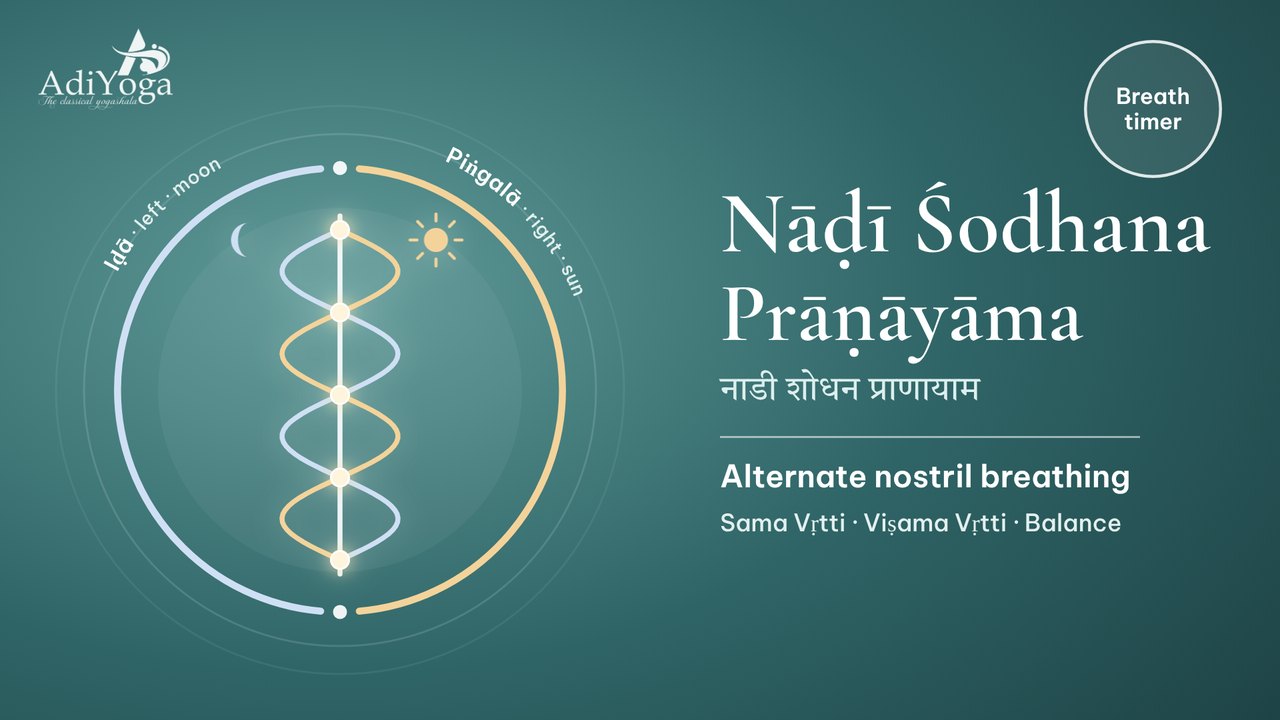
Nāḍī: channel of prāṇa, the life force · Śodhana: cleansing, purification · Iḍā · Piṅgalā: the left (moon, cooling) and right (sun, heating) channels
About this practice
Nāḍī Śodhana is breathing through one nostril at a time. It begins by exhaling through the left nostril. Then inhale left, exhale right; inhale right, exhale left. That is one round, and the practice always ends with an exhale through the left nostril. The Haṭha Yoga Pradīpikā (2.7–10) teaches it to purify the nāḍīs, the channels of prāṇa: when Iḍā on the left and Piṅgalā on the right are balanced, the mind becomes calm and ready for meditation. Choose an equal rhythm (Sama Vṛtti) or an uneven rhythm with holds (Viṣama Vṛtti).
Benefits
- Balances the left and right sides, body and mind
- Calms the nervous system; reduces stress and anxiety
- Clears the nostrils and the breath
- Improves focus; the classical preparation for meditation
- Supports restful sleep when practiced in the evening
Good to know
- Right hand in Nāsikā Mudrā: fold the index and middle fingers; the thumb closes the right nostril, the ring finger closes the left
- Start by exhaling through the left nostril, and always end with an exhale through the left
- Sit upright and still; keep the breath soft and silent, never forced
- Practice on an empty stomach; if the nose is blocked, clear it first
- High blood pressure, heart or eye conditions, pregnancy: do not hold the breath; avoid the Viṣama rhythm, stay with Sama Vṛtti at Beginner level, and ask your teacher
Ý nghĩa
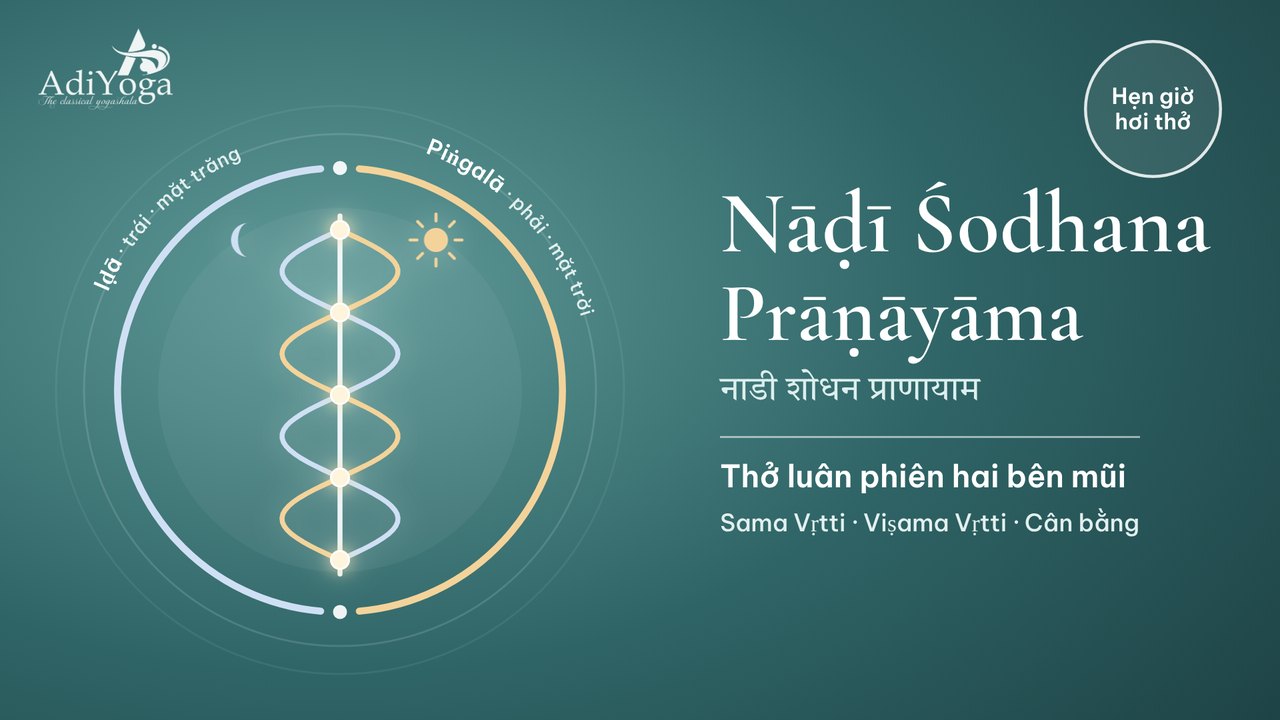
Nāḍī: kênh dẫn prāṇa, sinh lực · Śodhana: làm sạch, thanh lọc · Iḍā · Piṅgalā: kênh trái (mặt trăng, mát) và kênh phải (mặt trời, nóng)
Về bài tập
Nāḍī Śodhana là thở qua từng bên mũi. Bài tập bắt đầu bằng thở ra qua mũi trái. Sau đó hít vào bên trái, thở ra bên phải; hít vào bên phải, thở ra bên trái. Đó là một vòng, và bài tập luôn kết thúc bằng thở ra qua mũi trái. Haṭha Yoga Pradīpikā (2.7–10) dạy bài tập này để thanh lọc các nāḍī, những kênh dẫn prāṇa: khi Iḍā bên trái và Piṅgalā bên phải cân bằng, tâm trở nên bình tĩnh và sẵn sàng cho thiền. Chọn nhịp đều (Sama Vṛtti) hoặc nhịp không đều có nín thở (Viṣama Vṛtti).
Lợi ích
- Cân bằng hai bên trái và phải, thân và tâm
- Làm dịu hệ thần kinh; giảm căng thẳng và lo âu
- Làm thông mũi và hơi thở
- Tăng sự tập trung; bước chuẩn bị cổ điển cho thiền
- Giúp ngủ ngon khi tập vào buổi tối
Cần biết
- Tay phải làm Nāsikā Mudrā: gập ngón trỏ và ngón giữa; ngón cái đóng mũi phải, ngón áp út đóng mũi trái
- Bắt đầu bằng thở ra qua mũi trái, và luôn kết thúc bằng thở ra qua mũi trái
- Ngồi thẳng và yên; hơi thở nhẹ và êm, không bao giờ gắng sức
- Tập khi bụng đói; nếu mũi bị nghẹt, hãy làm thông mũi trước
- Huyết áp cao, bệnh tim hoặc mắt, mang thai: không nín thở; tránh nhịp Viṣama, chỉ tập Sama Vṛtti cấp Người mới, và hỏi giáo viên
Practice with video in the app
Follow the guided video with breath counting, in English or Vietnamese.
Tập theo video trong ứng dụng
Tập theo video có hướng dẫn và đếm hơi thở, bằng tiếng Việt hoặc tiếng Anh.