 Adiyogashala
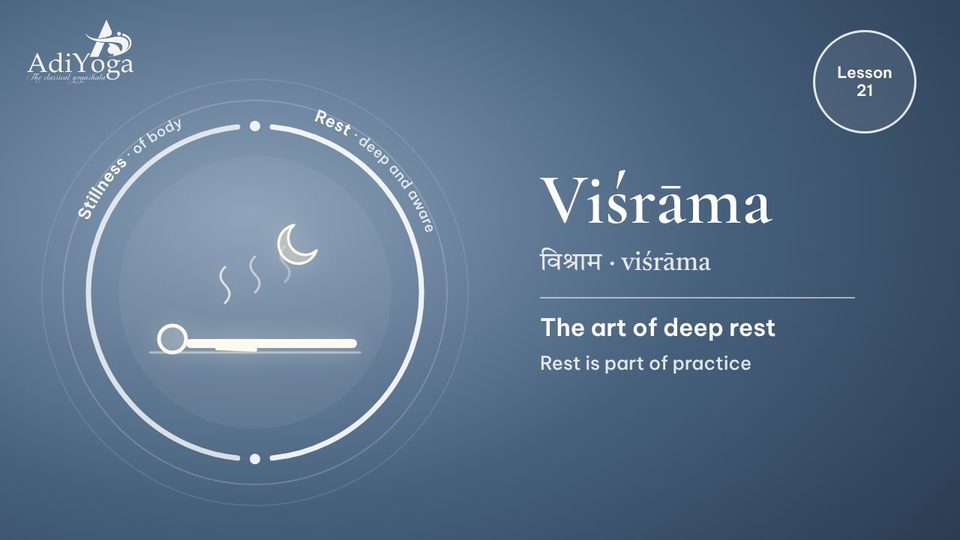
Vishrama: the art of deep rest
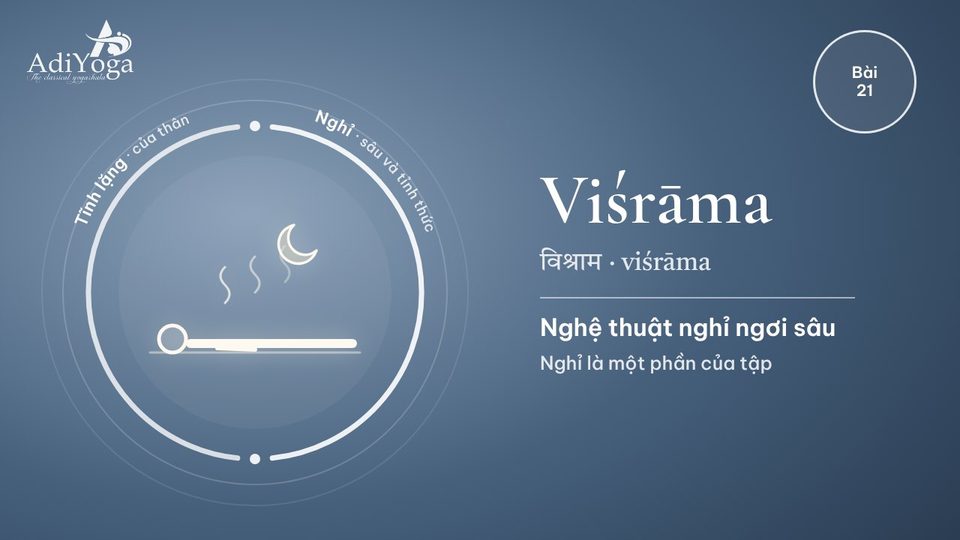
Vishrama: nghệ thuật nghỉ ngơi sâu
Vi means completely and shrama means effort or strain: Vishrama is the complete removal of effort. Modern life overstimulates the mind and underuses the body. Vishrama activates the body's relaxation response so the system can rest and repair. You don't necessarily need more sleep; you need more rest.
Many of my students sleep enough hours but still wake up tired. The reason is that the body lies down, but the mind keeps working. Vishrama teaches the system to truly rest: first the muscles, then the breath, then the mind.
We start by tensing and releasing the whole body, because a muscle cannot fully relax until it knows what tension feels like. The A sound releases the belly. Belly breathing switches on the relaxation response. The body scan draws the mind inward, part by part, until there is nothing left to do.
Practice it after class, before sleep, or whenever life feels heavy. With time you learn something precious: to rest while awake.
- After practice अभ्यास
- As a cool-down after yoga or exercise
- Before sleep निद्रा
- To prepare for deep, uninterrupted rest
- In stressful moments शान्ति
- When the mind or emotions feel overloaded
- At midday मध्याह्न
- A short reset for clarity and calm
End every practice with at least three minutes of rest. Lie down, let the body be heavy, and let the breath be natural.
During a busy day, a two-minute pause with closed eyes and slow breathing is a small viśrāma that resets the nervous system.
Rest at the end is wasted time.
Rest is when the body absorbs the practice. Skipping it loses much of the benefit.
Viśrāma is just sleeping.
It is conscious rest: deeply relaxed, yet aware.
Vi nghĩa là hoàn toàn và shrama nghĩa là nỗ lực hay căng thẳng: Vishrama là buông bỏ hoàn toàn mọi nỗ lực. Cuộc sống hiện đại kích thích tâm trí quá mức và ít vận động cơ thể. Vishrama kích hoạt phản ứng thư giãn tự nhiên để cơ thể nghỉ ngơi và phục hồi. Có khi chị không cần ngủ nhiều hơn; chị cần nghỉ ngơi nhiều hơn.
Nhiều học viên của tôi ngủ đủ giờ nhưng vẫn thức dậy mệt mỏi. Lý do là cơ thể nằm xuống, nhưng tâm trí vẫn tiếp tục làm việc. Vishrama dạy hệ thống thật sự nghỉ ngơi: trước tiên là cơ bắp, rồi hơi thở, rồi đến tâm trí.
Chúng ta bắt đầu bằng việc gồng và thả toàn thân, vì cơ bắp không thể thư giãn hoàn toàn cho đến khi nó biết căng thẳng là thế nào. Âm A giải phóng vùng bụng. Thở bụng kích hoạt phản ứng thư giãn. Việc quét cơ thể đưa tâm vào bên trong, từng phần một, cho đến khi không còn gì phải làm.
Hãy thực hành sau buổi học, trước khi ngủ, hoặc bất cứ khi nào cuộc sống thấy nặng nề. Dần dần chị sẽ học được một điều quý giá: nghỉ ngơi ngay cả khi đang tỉnh.
- After practice अभ्यास
- Thư giãn sau khi tập yoga hay thể dục
- Before sleep निद्रा
- Chuẩn bị cho giấc ngủ sâu, không gián đoạn
- In stressful moments शान्ति
- Khi tâm trí hay cảm xúc quá tải
- At midday मध्याह्न
- Một khoảng nghỉ ngắn để sáng suốt và bình tĩnh
Kết thúc mỗi buổi tập bằng ít nhất ba phút nghỉ ngơi. Nằm xuống, để cơ thể nặng xuống, và để hơi thở tự nhiên.
Giữa một ngày bận rộn, hai phút dừng lại, nhắm mắt và thở chậm là một viśrāma nhỏ giúp hệ thần kinh được làm mới.
Nghỉ ngơi cuối buổi là lãng phí thời gian.
Nghỉ ngơi là lúc cơ thể hấp thụ việc tập. Bỏ qua là mất đi nhiều lợi ích.
Viśrāma chỉ là ngủ.
Đó là sự nghỉ ngơi có ý thức: thư giãn sâu nhưng vẫn tỉnh thức.