 Adiyogashala
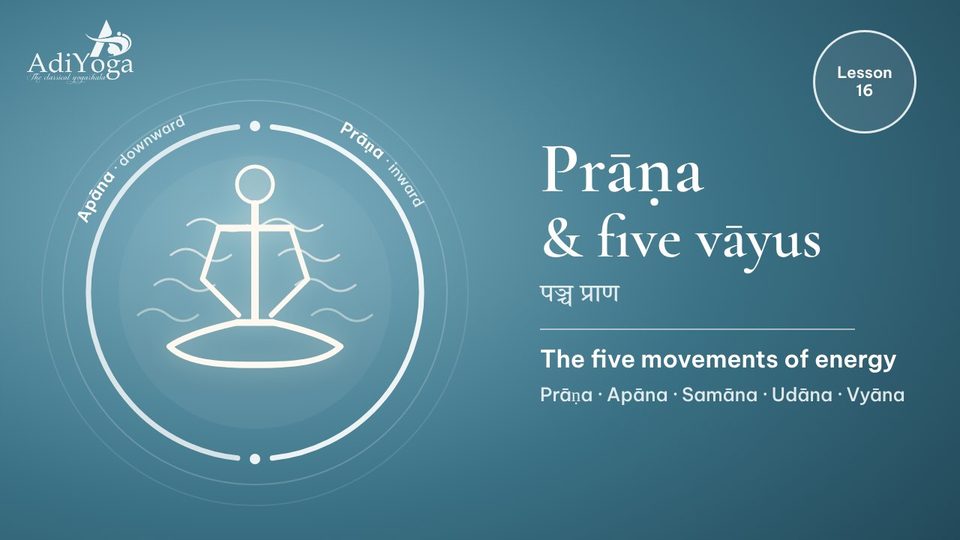
Prana is the life energy that moves body and mind. It works as five movements, called vayus.
Prana is the energy that keeps us alive: it breathes for us, digests for us, thinks for us. When it flows freely we feel vital and clear. When it is blocked or scattered we feel tired, heavy or anxious, even if the body is healthy.
Each vayu has its own direction. In practice we work with them consciously: inhalation and chest opening support prana vayu, Mula Bandha guides apana upward, twists and Uddiyana Bandha stimulate samana at the navel, chanting awakens udana in the throat, and full-body movements like Surya Namaskara spread vyana everywhere.
This is why we say the breath is the bridge between body and mind. By guiding the breath, we guide prana, and by guiding prana, the mind follows.
- Prana प्राण
- Moves inward and upward; chest; inhalation
- Apana अपान
- Moves downward and out; pelvis; elimination
- Samana समान
- Moves to the center; navel; digestion
- Udana उदान
- Moves upward; throat and head; speech
- Vyana व्यान
- Spreads through the whole body; circulation
Feel the vāyus in simple ways: the inhale rising in the chest is prāṇa; the exhale moving down and out is apāna; the warmth in the belly after practice is samāna.
Bandhas and slow breathing guide these currents. You do not need to force them; awareness and steady practice are enough.
Prāṇa is just oxygen.
Prāṇa is life energy. The breath is its most visible form, but prāṇa is more than air.
You must feel energy strongly for practice to work.
Sensations come and go. Steady practice works whether you feel strong sensations or not.
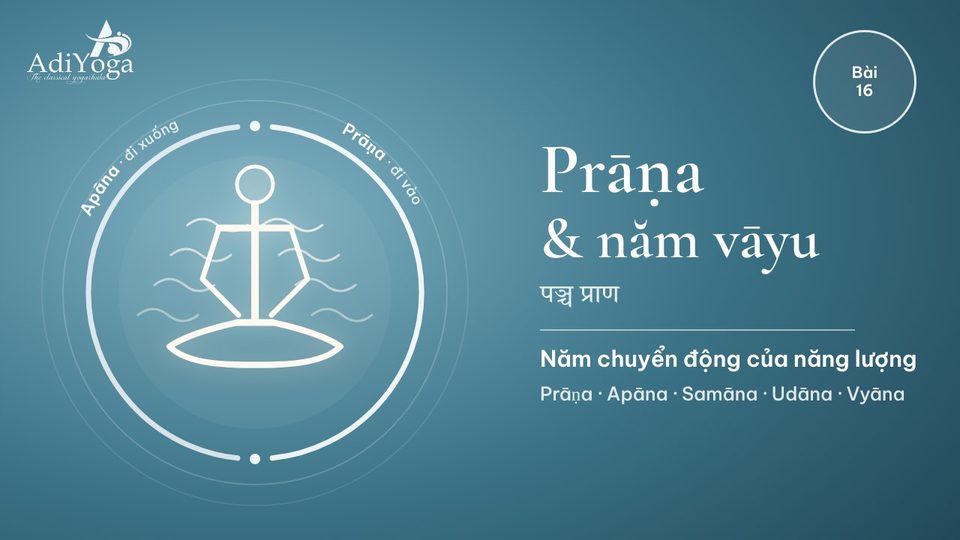
Prana là năng lượng sống vận hành thân và tâm. Prana hoạt động qua năm chuyển động gọi là vayu.
Prana là năng lượng giữ cho ta sống: nó thở cho ta, tiêu hoá cho ta, suy nghĩ cho ta. Khi prana lưu thông tự do, ta thấy tràn đầy sinh lực và sáng suốt. Khi nó bị tắc nghẽn hay phân tán, ta thấy mệt mỏi, nặng nề hay lo âu, dù cơ thể vẫn khoẻ mạnh.
Mỗi vayu có hướng chuyển động riêng. Trong thực hành, chúng ta làm việc với chúng một cách có ý thức: hít vào và mở ngực hỗ trợ prana vayu, Mula Bandha dẫn apana đi lên, các tư thế vặn mình và Uddiyana Bandha kích thích samana ở vùng rốn, tụng âm đánh thức udana ở cổ họng, và những chuyển động toàn thân như Surya Namaskara lan toả vyana khắp cơ thể.
Vì vậy chúng ta nói hơi thở là cây cầu nối thân và tâm. Khi dẫn dắt hơi thở, ta dẫn dắt prana; khi dẫn dắt prana, tâm sẽ theo.
- Prana प्राण
- Đi vào và đi lên; vùng ngực; hít vào
- Apana अपान
- Đi xuống và ra ngoài; vùng chậu; bài tiết
- Samana समान
- Quy về trung tâm; vùng rốn; tiêu hoá
- Udana उदान
- Đi lên; cổ họng và đầu; lời nói
- Vyana व्यान
- Lan toả khắp cơ thể; tuần hoàn
Cảm nhận các vāyu một cách đơn giản: hơi hít vào dâng lên trong ngực là prāṇa; hơi thở ra đi xuống và ra ngoài là apāna; hơi ấm ở bụng sau buổi tập là samāna.
Bandha và hơi thở chậm dẫn dắt các dòng chảy này. Không cần ép buộc; sự nhận biết và việc tập đều đặn là đủ.
Prāṇa chỉ là oxy.
Prāṇa là năng lượng sống. Hơi thở là dạng dễ thấy nhất của nó, nhưng prāṇa không chỉ là không khí.
Phải cảm nhận năng lượng mạnh thì việc tập mới có tác dụng.
Cảm giác đến rồi đi. Tập đều đặn vẫn có tác dụng dù bạn có cảm nhận mạnh hay không.