 Adiyogashala
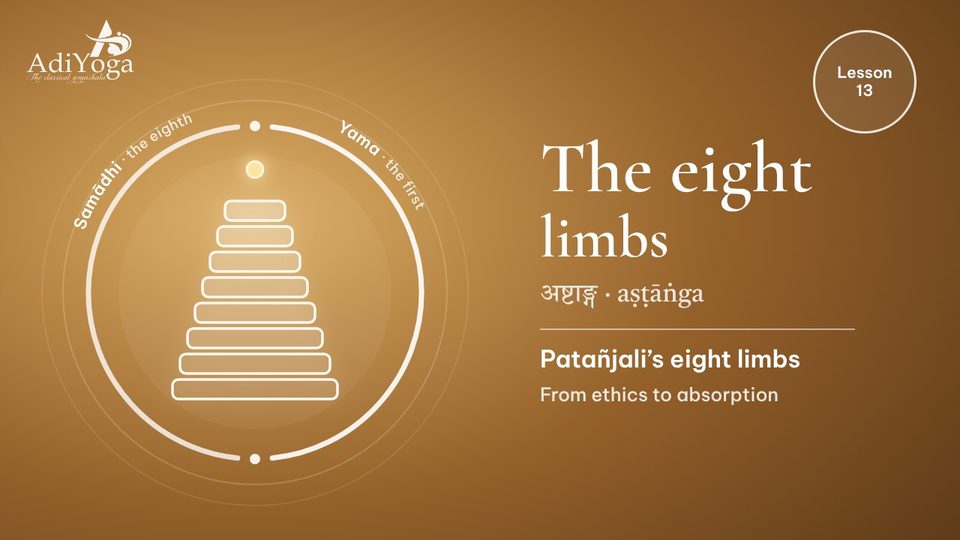
Patanjali's Yoga Sutras describe eight limbs, from how we live with others to complete absorption. Asana is only the third.
The eight limbs are not eight steps where you finish one and move to the next. They grow together, like the limbs of one body. A student who practices asana with honesty is already practicing yama. A student who keeps a regular practice is already practicing niyama.
Asana is only the third limb, yet it is where most people begin, and that is fine. A steady, comfortable posture is the foundation for pranayama. Through the breath the senses turn inward (pratyahara), the mind gathers (dharana), attention flows (dhyana), and one day absorption (samadhi) happens by itself.
In class you will touch several limbs in one session: postures for the body, breath for prana, chanting and stillness for the mind. Over time, the ethics of yama and niyama begin to show in daily life too.
- Yama यम
- Restraints: non-violence, truthfulness, non-stealing, moderation, non-possessiveness
- Niyama नियम
- Observances: cleanliness, contentment, discipline, self-study, surrender
- Asana आसन
- A steady, comfortable posture
- Pranayama प्राणायाम
- Regulation of breath and prana
- Pratyahara प्रत्याहार
- Withdrawing the senses from their objects
- Dharana धारणा
- Concentration on one point
- Dhyana ध्यान
- Meditation: an unbroken flow of attention
- Samadhi समाधि
- Absorption, where meditator and object become one
You do not need to master one limb before the next. In one session you can touch several: kindness to yourself (yama), steady effort (niyama), posture, breath, turning inward and a moment of focus.
Pick one yama or niyama for the week, for example non-violence: do not force the body. Watch how it changes the practice.
Yoga is the same as asana.
Asana is only the third of eight limbs. The others are ethics, discipline, breath, withdrawal of the senses, concentration, meditation and absorption.
The limbs must be done one after another, in strict order.
They support each other and grow together, like the limbs of one body.
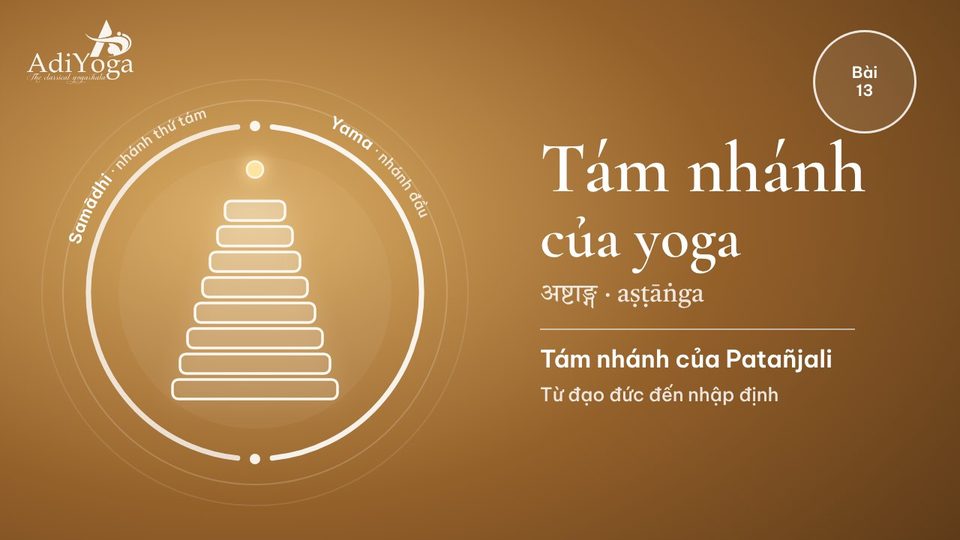
Yoga Sutra của Patanjali mô tả tám nhánh, từ cách ta sống với người khác đến trạng thái hoàn toàn hợp nhất. Asana chỉ là nhánh thứ ba.
Tám nhánh không phải là tám bậc, làm xong bậc này mới sang bậc khác. Chúng lớn lên cùng nhau, như các chi của một cơ thể. Người tập asana một cách trung thực đã đang thực hành yama. Người duy trì việc tập đều đặn đã đang thực hành niyama.
Asana chỉ là nhánh thứ ba, nhưng lại là nơi phần lớn mọi người bắt đầu, và điều đó hoàn toàn tốt. Một tư thế vững vàng, thoải mái là nền tảng cho pranayama. Qua hơi thở, các giác quan hướng vào trong (pratyahara), tâm được thu về (dharana), sự chú tâm tuôn chảy (dhyana), và một ngày nào đó, sự nhập định (samadhi) tự đến.
Trong một buổi học, chị sẽ chạm đến nhiều nhánh: tư thế cho cơ thể, hơi thở cho prana, tụng âm và tĩnh lặng cho tâm. Theo thời gian, tinh thần của yama và niyama cũng bắt đầu thể hiện trong đời sống hằng ngày.
- Yama यम
- Giới luật: bất bạo động, chân thật, không trộm cắp, tiết độ, không chiếm hữu
- Niyama नियम
- Tự giới: thanh sạch, tri túc, kỷ luật, tự học hỏi, quy phục
- Asana आसन
- Tư thế vững vàng và thoải mái
- Pranayama प्राणायाम
- Điều hoà hơi thở và prana
- Pratyahara प्रत्याहार
- Thu nhiếp các giác quan khỏi đối tượng
- Dharana धारणा
- Tập trung vào một điểm
- Dhyana ध्यान
- Thiền: dòng chú tâm không gián đoạn
- Samadhi समाधि
- Nhập định, khi người thiền và đối tượng trở thành một
Bạn không cần hoàn thiện một nhánh rồi mới đến nhánh tiếp theo. Trong một buổi tập, bạn có thể chạm đến nhiều nhánh: tử tế với chính mình (yama), nỗ lực đều đặn (niyama), tư thế, hơi thở, hướng vào trong và một khoảnh khắc tập trung.
Hãy chọn một yama hoặc niyama cho tuần này, ví dụ bất bạo động: không ép cơ thể. Quan sát xem việc tập thay đổi thế nào.
Yoga cũng chính là asana.
Asana chỉ là nhánh thứ ba trong tám nhánh. Các nhánh khác là đạo đức, kỷ luật, hơi thở, thu nhiếp giác quan, tập trung, thiền định và nhập định.
Phải tập các nhánh lần lượt, đúng thứ tự nghiêm ngặt.
Các nhánh hỗ trợ nhau và cùng phát triển, như các chi của một cơ thể.