 Adiyogashala
Vāyu Dhauti
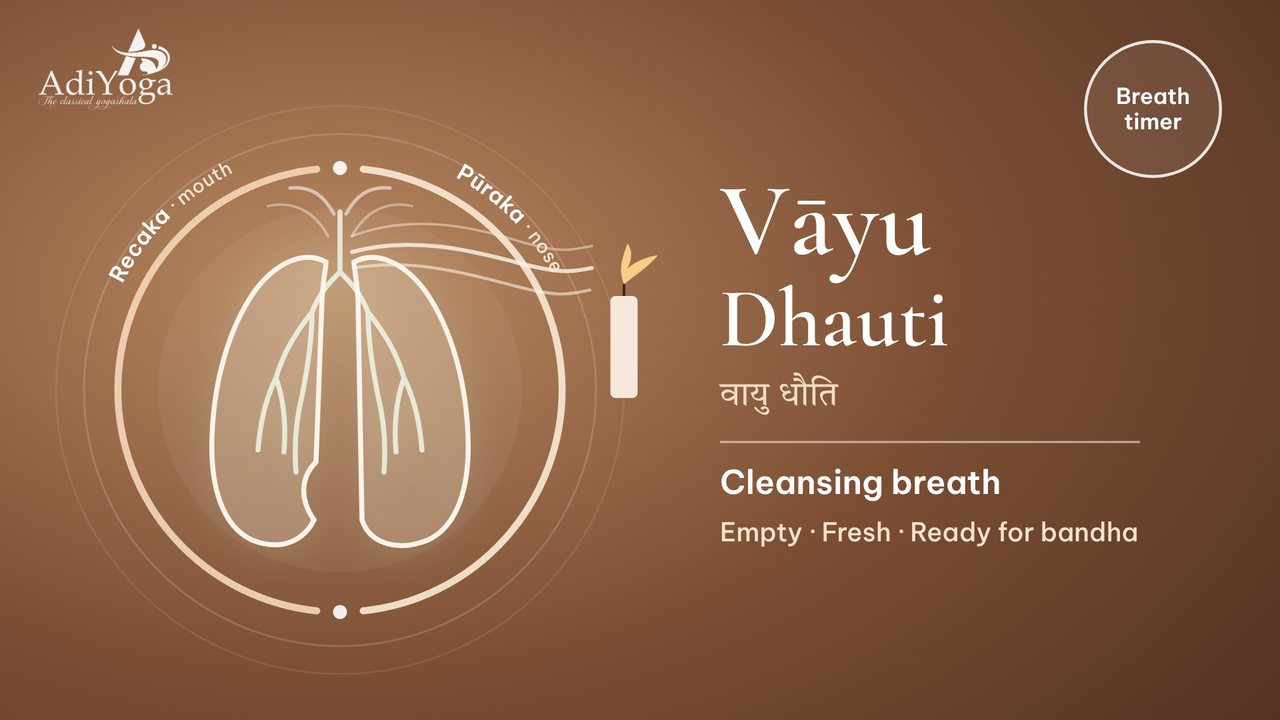
Cleansing breath: empty the lungs, prepare for the bandhas
Vāyu Dhauti
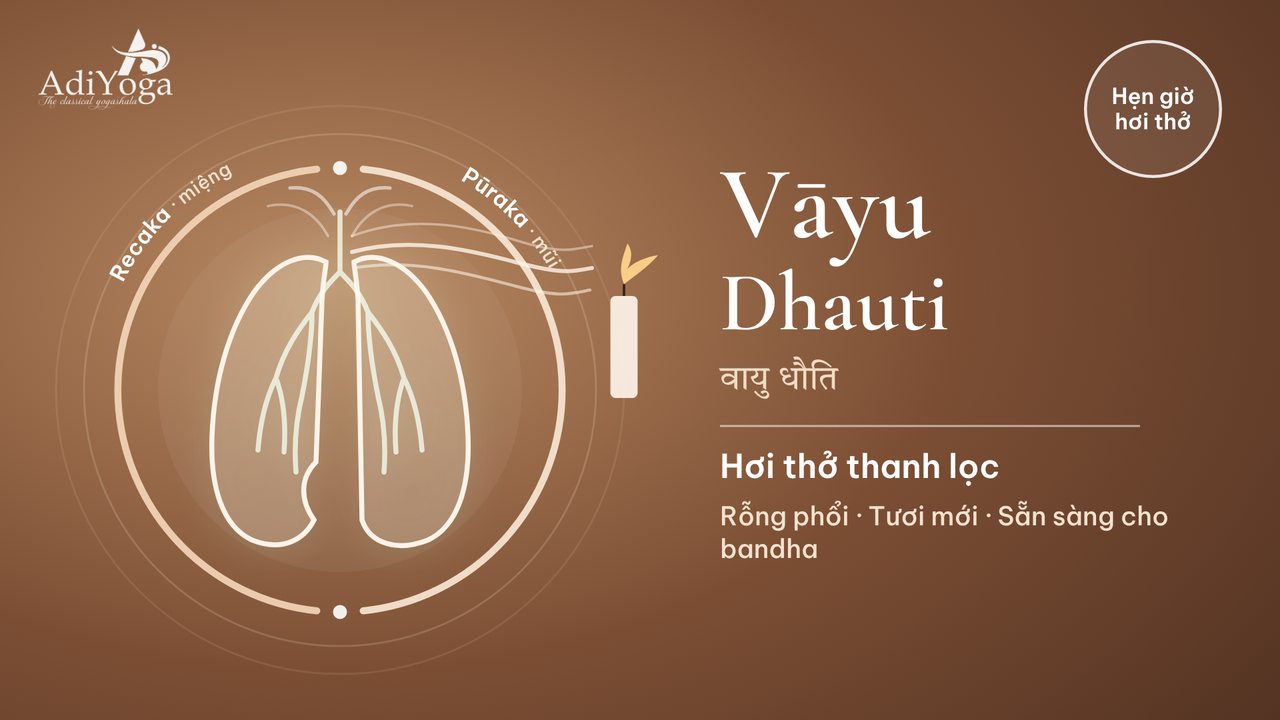
Hơi thở thanh lọc: làm rỗng phổi, chuẩn bị cho các bandha
Meaning
Vāyu: air, wind; the moving breath · Dhauti: cleansing, washing (from dhāv, to wash)
About this practice
Vāyu Dhauti means cleansing with air. Inhale slowly and deeply through the nose, then blow the air out through the mouth in one strong breath, like blowing out a candle. The forceful exhale empties the lungs far more than a normal breath, clears stale air and heaviness, and makes the abdomen ready for the bandhas, such as Uḍḍiyāna. At the higher levels, the empty-lung hold is used to practice the bandhas: Uḍḍiyāna, Jālandhara and Mūla, and at Advanced, expanding the belly while still holding. It is the cleansing preparation for bandha and prāṇāyāma.
Benefits
- Empties the lungs more fully, so the next breath is deeper and fresher
- Prepares for Uḍḍiyāna bandha, Agnisāra and Nauli, which need empty lungs
- Strengthens the abdominal muscles and the diaphragm
- Clears stale air and heaviness before prāṇāyāma or meditation
- Warms the body and wakes up a dull mind
- Releases held-in tension and emotion with each strong exhale
Good to know
- Practice on an empty stomach, sitting upright
- Inhale only through the nose; exhale only through the mouth
- Blow out strongly but without strain; relax the face and shoulders
- Stop if you feel dizzy or lightheaded, and breathe normally
- Bandha holds (Intermediate, Advanced): only on an empty stomach; release the locks fully and lift the head before inhaling
- High blood pressure, heart conditions, hernia, recent abdominal surgery, pregnancy or menstruation: avoid, or practice only very gently and ask your teacher
Ý nghĩa
Vāyu: không khí, gió; hơi thở chuyển động · Dhauti: thanh lọc, rửa sạch (từ dhāv, rửa)
Về bài tập
Vāyu Dhauti nghĩa là thanh lọc bằng không khí. Hít vào chậm và sâu bằng mũi, rồi thổi không khí ra bằng miệng trong một hơi mạnh, như thổi tắt ngọn nến. Hơi thở ra mạnh làm rỗng phổi nhiều hơn hơi thở thường, đẩy đi không khí cũ và sự nặng nề, và chuẩn bị vùng bụng cho các bandha như Uḍḍiyāna. Ở các trình độ cao hơn, lần nín thở với phổi rỗng được dùng để tập các bandha: Uḍḍiyāna, Jālandhara và Mūla, và ở trình độ Nâng cao, phình bụng ra trong khi vẫn nín thở. Đây là bước thanh lọc chuẩn bị cho bandha và prāṇāyāma.
Lợi ích
- Làm rỗng phổi trọn vẹn hơn, để hơi thở tiếp theo sâu và tươi mới hơn
- Chuẩn bị cho Uḍḍiyāna bandha, Agnisāra và Nauli, vốn cần phổi rỗng
- Làm khoẻ cơ bụng và cơ hoành
- Đẩy đi không khí cũ và sự nặng nề trước prāṇāyāma hoặc thiền
- Làm ấm cơ thể và đánh thức tâm trí uể oải
- Giải phóng căng thẳng và cảm xúc dồn nén qua mỗi hơi thở ra mạnh
Cần biết
- Tập khi bụng đói, ngồi thẳng lưng
- Chỉ hít vào bằng mũi; chỉ thở ra bằng miệng
- Thổi ra mạnh nhưng không gắng sức; thả lỏng mặt và vai
- Dừng lại nếu thấy chóng mặt hoặc choáng váng, và thở bình thường
- Nín thở với bandha (Trung cấp, Nâng cao): chỉ khi bụng đói; thả hết các khoá và ngẩng đầu lên trước khi hít vào
- Cao huyết áp, bệnh tim, thoát vị, mới phẫu thuật vùng bụng, mang thai hoặc đang hành kinh: tránh tập, hoặc chỉ tập thật nhẹ và hỏi giáo viên
Practice with video in the app
Follow the guided video with breath counting, in English or Vietnamese.
Tập theo video trong ứng dụng
Tập theo video có hướng dẫn và đếm hơi thở, bằng tiếng Việt hoặc tiếng Anh.