 Adiyogashala
Bhastrikā Prāṇāyāma
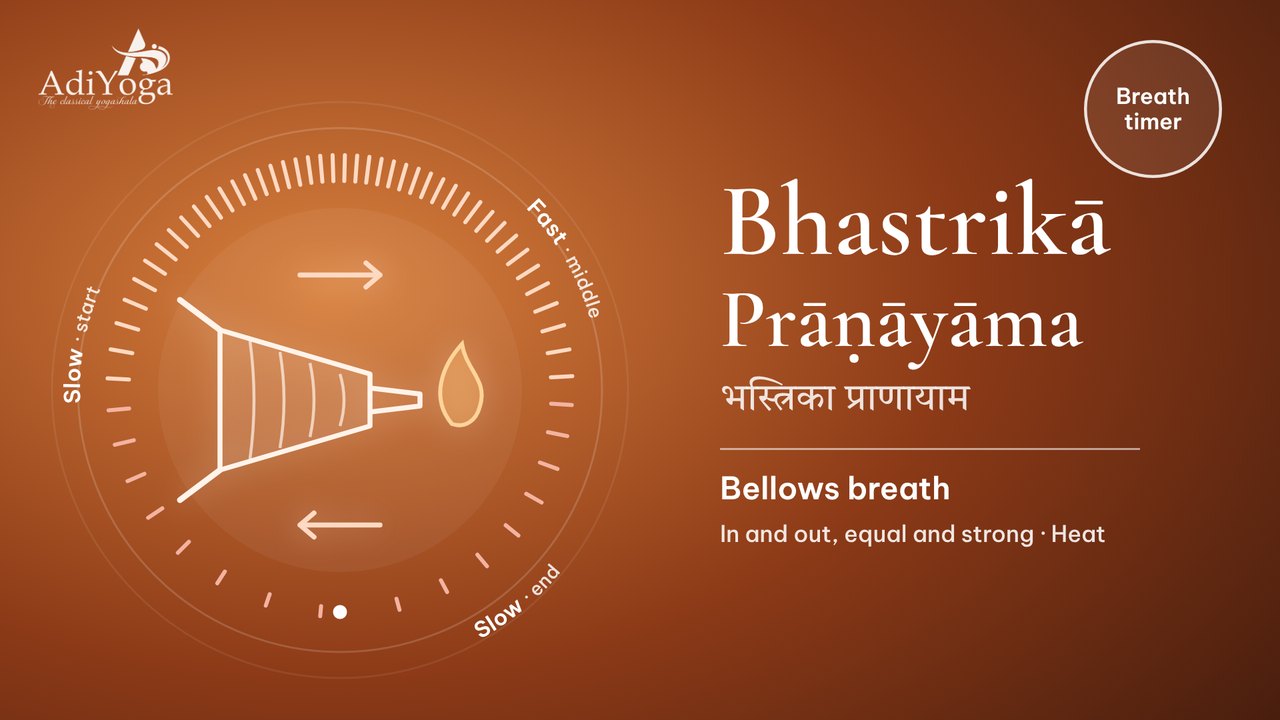
Bellows breath: strong, equal inhales and exhales that build heat and energy
Bhastrikā Prāṇāyāma
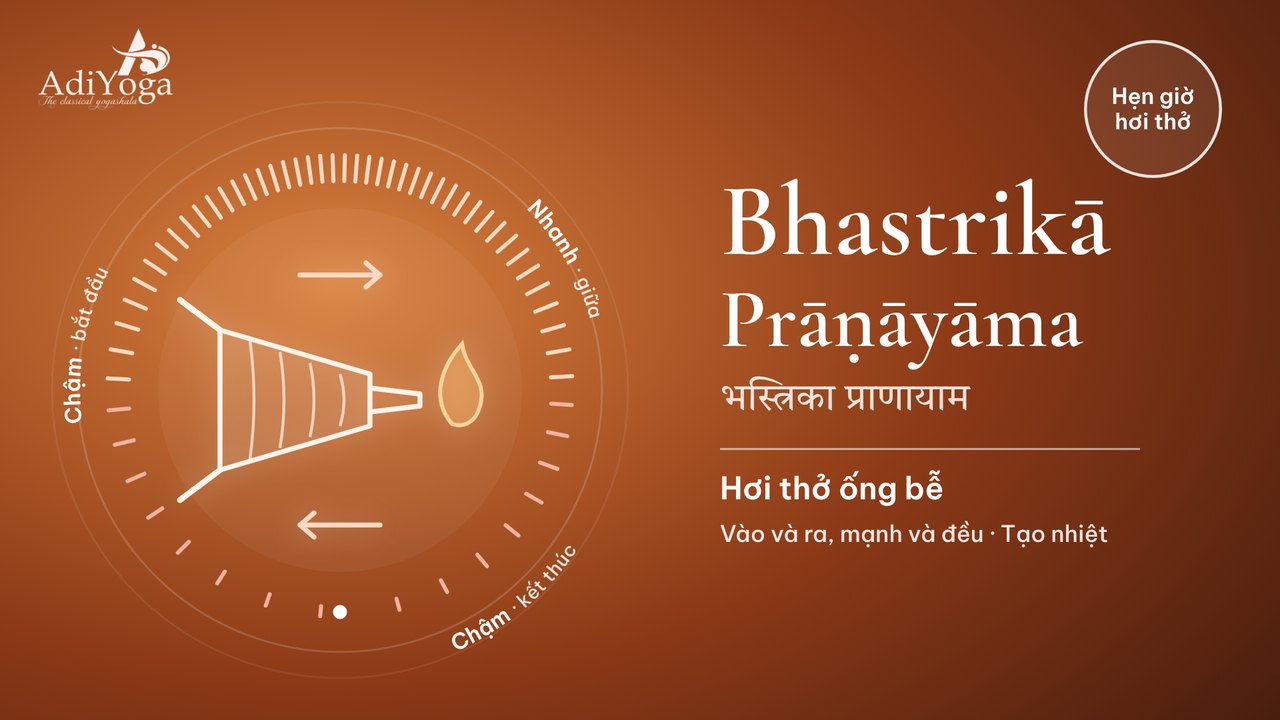
Hơi thở ống bễ: hít vào và thở ra mạnh, bằng nhau, tạo nhiệt và năng lượng
Meaning
Bhastrikā: bellows, the blacksmith's bag of air · Prāṇāyāma: expansion of prāṇa, the life force
About this practice
Bhastrikā means bellows. Like a blacksmith fanning the fire, both the inhale and the exhale are strong and quick, and of equal length; the belly moves out on the inhale and in on the exhale. This is the difference from Kapālabhāti, where only the exhale is active. The Haṭha Yoga Pradīpikā (2.59–67) praises it for building heat in the body, clearing the channels and awakening energy. In the app the breaths start slowly, gradually become faster, and slow down before each round ends; then a deep inhale, a slow exhale, and rest.
Benefits
- Builds heat; awakens energy and alertness
- Strengthens the lungs and the breathing muscles
- Clears the nose and the chest
- Tones the abdomen; supports digestion
- Clears dullness; prepares the mind for prāṇāyāma and meditation
Good to know
- Sit upright, spine straight, hands on the knees; keep the face and shoulders relaxed
- Inhale and exhale through the nose, BOTH forceful and of the same length; the belly moves out and in, the chest stays steady
- Start slowly and build the speed gently; slow down before the end of each round
- Rest between rounds with normal breathing; on an empty stomach (3–4 hours after a meal)
- Do NOT practice in pregnancy or during menstruation, or with high blood pressure, heart disease, hernia, recent abdominal or chest surgery, epilepsy, vertigo, a history of stroke, glaucoma, stomach ulcer, acidity, lung disease, an asthma attack or a fever
- Stop at once if you feel dizzy, tingling or breathless; breathe normally and rest
Ý nghĩa
Bhastrikā: ống bễ, túi thổi lửa của thợ rèn · Prāṇāyāma: mở rộng prāṇa, sinh lực
Về bài tập
Bhastrikā nghĩa là ống bễ. Như người thợ rèn thổi lửa, cả hít vào và thở ra đều mạnh và nhanh, dài bằng nhau; bụng phồng ra khi hít vào và hóp vào khi thở ra. Đây là điểm khác với Kapālabhāti, nơi chỉ có thở ra là chủ động. Haṭha Yoga Pradīpikā (2.59–67) ca ngợi bài tập vì tạo nhiệt trong cơ thể, làm thông các kênh năng lượng và đánh thức sinh lực. Trong ứng dụng, các hơi thở bắt đầu chậm, nhanh dần, rồi chậm lại trước khi mỗi vòng kết thúc; sau đó hít sâu, thở ra chậm, và nghỉ.
Lợi ích
- Tạo nhiệt; đánh thức năng lượng và sự tỉnh táo
- Làm khỏe phổi và các cơ hô hấp
- Làm thông mũi và lồng ngực
- Làm săn chắc vùng bụng; hỗ trợ tiêu hóa
- Xua tan sự uể oải; chuẩn bị tâm cho prāṇāyāma và thiền
Cần biết
- Ngồi thẳng, cột sống thẳng, tay đặt trên gối; mặt và vai thả lỏng
- Hít vào và thở ra qua mũi, CẢ HAI đều mạnh và dài bằng nhau; bụng phồng ra và hóp vào, ngực giữ yên
- Bắt đầu chậm và tăng tốc độ nhẹ nhàng; chậm lại trước khi kết thúc mỗi vòng
- Nghỉ giữa các vòng với hơi thở bình thường; tập khi bụng đói (3–4 giờ sau bữa ăn)
- KHÔNG tập khi mang thai hoặc trong kỳ kinh nguyệt, hoặc khi bị huyết áp cao, bệnh tim, thoát vị, mới phẫu thuật bụng hay ngực, động kinh, chóng mặt, từng bị đột quỵ, tăng nhãn áp, loét dạ dày, dư axit, bệnh phổi, đang lên cơn hen hoặc đang sốt
- Dừng ngay nếu thấy chóng mặt, tê ran hoặc hụt hơi; thở bình thường và nghỉ ngơi
Practice with video in the app
Follow the guided video with breath counting, in English or Vietnamese.
Tập theo video trong ứng dụng
Tập theo video có hướng dẫn và đếm hơi thở, bằng tiếng Việt hoặc tiếng Anh.