 Adiyogashala
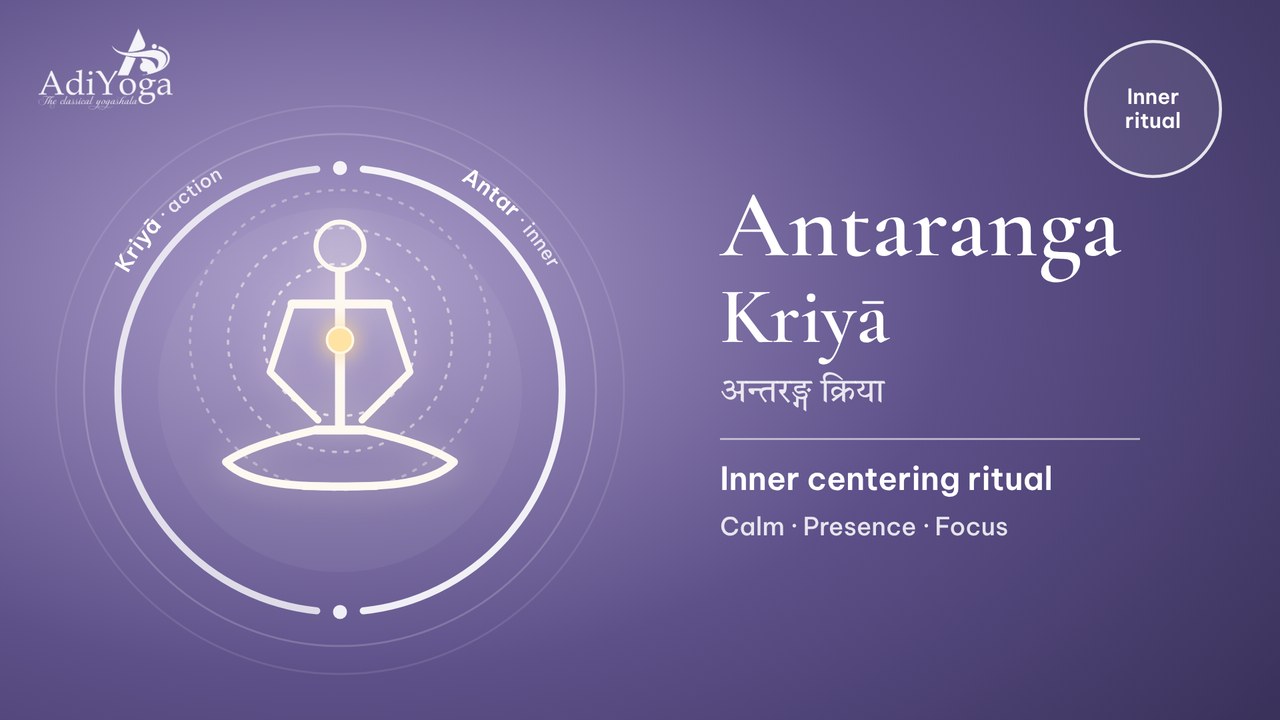
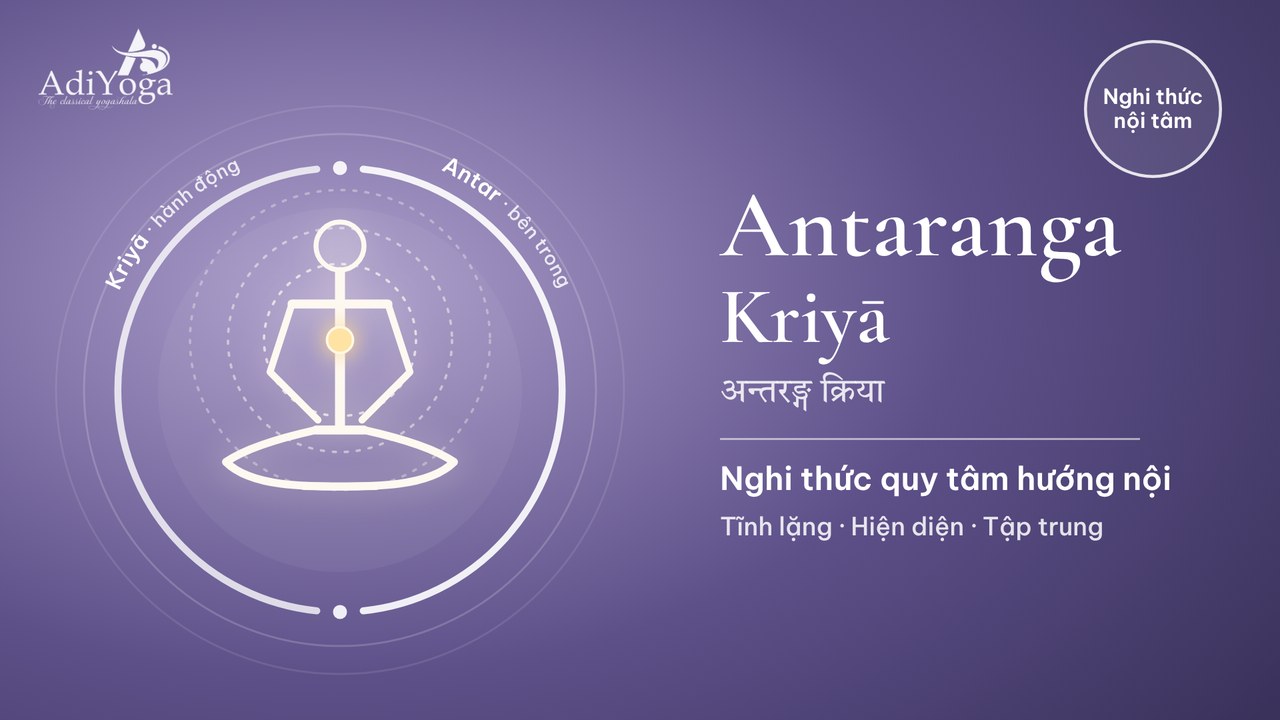
Antaranga Kriyā
Inner centering: from daily distractions to the mat
Antaranga Kriyā
Quy tâm hướng nội: từ xao động thường ngày đến tấm thảm
Meaning
Antaranga: inner · Kriyā: inward action
About this practice
We often arrive on the mat carrying mental noise, emotional residue and outside distractions. This short meditative practice settles the body and breath, clears the mind and shifts awareness inward, preparing the whole system for āsana, prāṇāyāma and meditation.
Step by step
Sukhāsana or any comfortable posture. Eyes closed, spine erect, tailbone slightly back, chest open, shoulders back and down.
Tips of index finger and thumb together, other fingers extended, palms on the knees facing up.
Chin slightly up, soften forehead and eyebrows, a gentle smile.
Deep gentle inhalation, hold for a few counts, exhale completely and slowly. 5 rounds.
‘A’ at the navel, ‘U’ at the chest, ‘M’ at the brow, then A-U-M together. 5 times.
Repeat A-U-M mentally, 5 times. Feel the inner vibration and presence.
A natural pause: no inhalation, no exhalation, no effort. Rest in it.
Rub the palms, cup them over the closed eyes, open the eyes into the palms.
Namaste at the heart, bow forward and offer silent gratitude.
Benefits
- Calms the mind and reduces stress
- Clears distractions and emotional clutter
- Centers awareness and improves focus
- Aligns posture and breath gently
- Balances energy and prepares for deeper practice
- Encourages inward attention (Pratyāhāra)
- Builds a meditative, grateful state to begin
Good to know
- Silence your phone (Do Not Disturb)
- Sit in Sukhāsana or any comfortable seat, spine erect
- Keep the eyes gently closed
- Practice it before any session, or on its own
Ý nghĩa
Antaranga: bên trong · Kriyā: hành động hướng nội
Về bài tập
Chúng ta thường bước lên thảm mang theo tiếng ồn trong tâm trí, cảm xúc còn vương lại và những xao động bên ngoài. Thực hành thiền ngắn này giúp lắng dịu thân và hơi thở, làm trong tâm và đưa sự nhận biết vào bên trong, chuẩn bị cho asana, prāṇāyāma và thiền.
Từng bước
Sukhāsana hoặc tư thế dễ chịu. Nhắm mắt, lưng thẳng, xương cụt hơi ra sau, mở ngực, vai xuôi ra sau.
Đầu ngón trỏ chạm đầu ngón cái, ba ngón còn lại duỗi nhẹ, lòng bàn tay ngửa trên gối.
Cằm hơi nâng, thả lỏng trán và chân mày, mỉm cười nhẹ.
Hít vào sâu và nhẹ, giữ vài nhịp, thở ra hết và chậm. 5 vòng.
‘A’ ở rốn, ‘U’ ở ngực, ‘M’ ở giữa chân mày, rồi A-U-M cùng nhau. 5 lần.
Niệm A-U-M trong tâm 5 lần. Cảm nhận rung động bên trong.
Khoảng dừng tự nhiên: không hít, không thở, không gắng sức. Nghỉ trong đó.
Xoa hai lòng bàn tay, áp lên mắt đang nhắm, mở mắt trong lòng bàn tay.
Chắp tay trước ngực, cúi đầu và gửi lòng biết ơn trong im lặng.
Lợi ích
- Làm dịu tâm trí và giảm căng thẳng
- Gạt bỏ xao động và những vướng bận cảm xúc
- Quy tụ sự nhận biết, tăng khả năng tập trung
- Điều chỉnh tư thế và hơi thở một cách nhẹ nhàng
- Cân bằng năng lượng, chuẩn bị cho thực hành sâu hơn
- Khuyến khích sự chú tâm hướng nội (Pratyāhāra)
- Tạo trạng thái thiền định và biết ơn để bắt đầu
Cần biết
- Tắt tiếng điện thoại (chế độ Không làm phiền)
- Ngồi Sukhāsana hoặc tư thế thoải mái, lưng thẳng
- Nhắm mắt nhẹ nhàng
- Tập trước mỗi buổi tập, hoặc tập riêng khi cần
Practice with video in the app
Follow the guided video with breath counting, in English or Vietnamese.
Tập theo video trong ứng dụng
Tập theo video có hướng dẫn và đếm hơi thở, bằng tiếng Việt hoặc tiếng Anh.